
Docs
Project Orchestrator documentation
Everything between the first install and the code: how to start, how a plan runs, how the pieces are built, and where to contribute. The technical pages come with diagrams drawn from verified diagrams in the public repositories.
Pick a path
Five ways in, depending on what you want to do.
Architecture overview
One diagram of the whole: the clients, the server, the knowledge graph, the agent SDK and the agents behind it, with links to every detail page.
Read the overview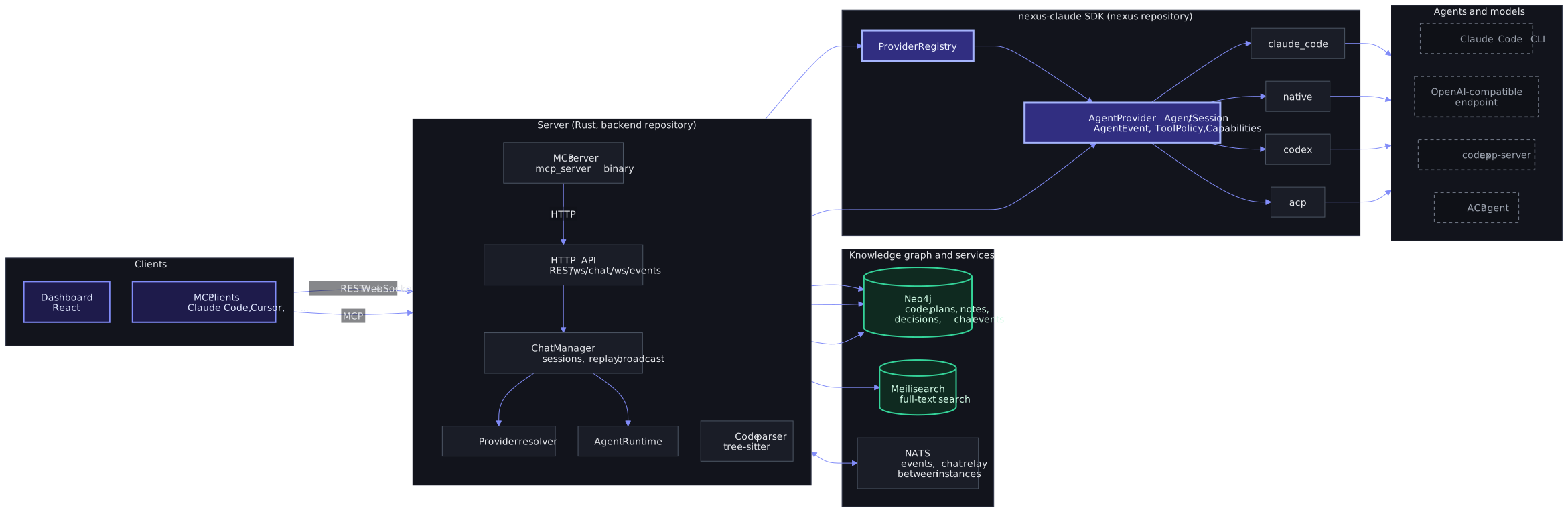
Internals, one subject at a time
Each page has the same shape: what it does, the diagram, a guided reading, why it is built this way, and the public sources. Suggested reading order. Each page links to the previous and the next one.
- Page 1 of 9
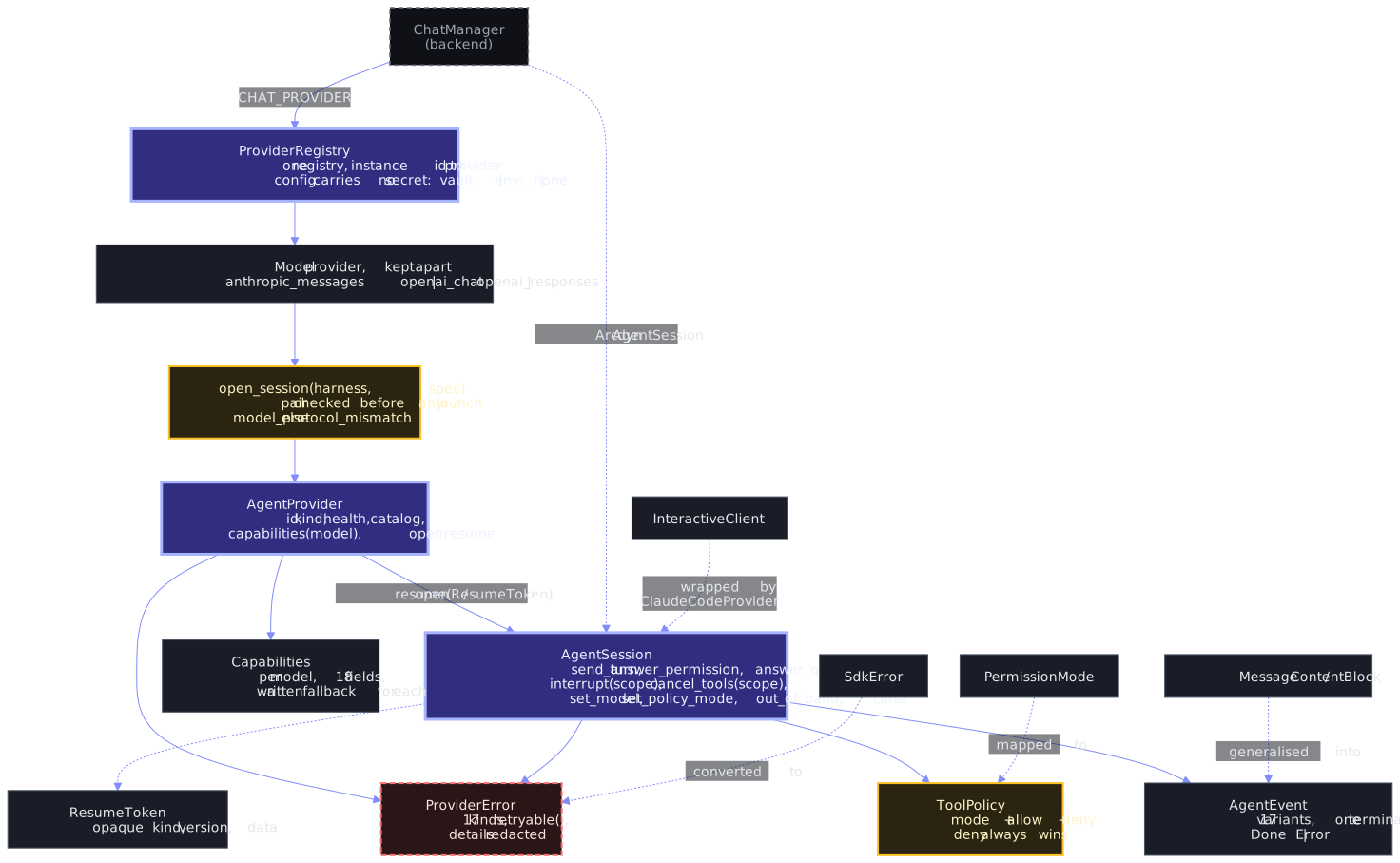
One contract for every coding agent
The small set of types every coding agent is reached through: providers, sessions, events, policies, capabilities.
Read the walkthrough - Page 2 of 9
Four ways to run an agent, one test suite
Claude Code, a native harness on OpenAI-compatible endpoints, Codex and ACP: how they differ and how one test suite keeps them honest.
Read the walkthrough - Page 3 of 9
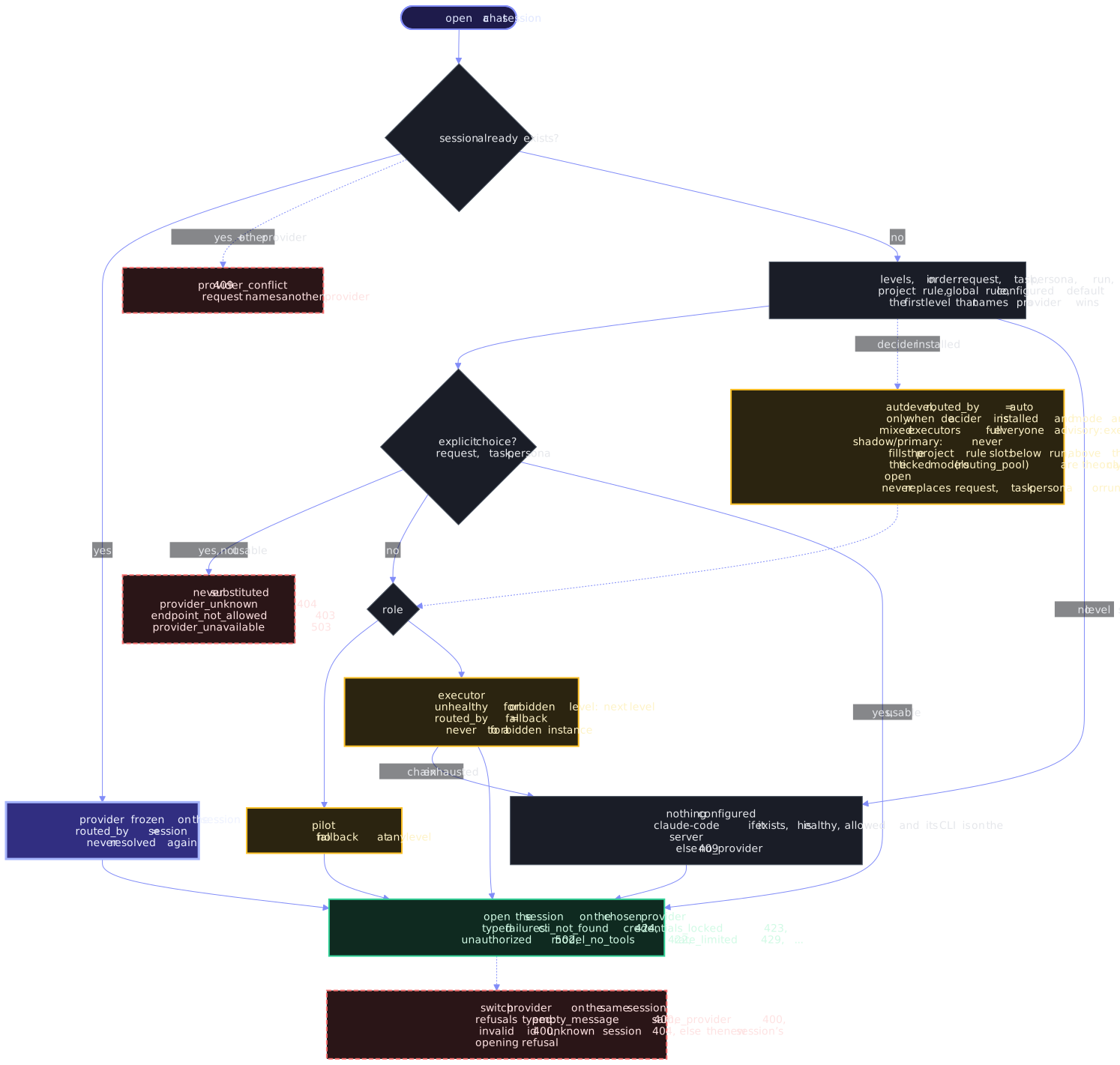
Which provider runs this session?
The ordered rule that picks the provider of a chat session, and when it is allowed to change its mind.
Read the walkthrough - Page 4 of 9
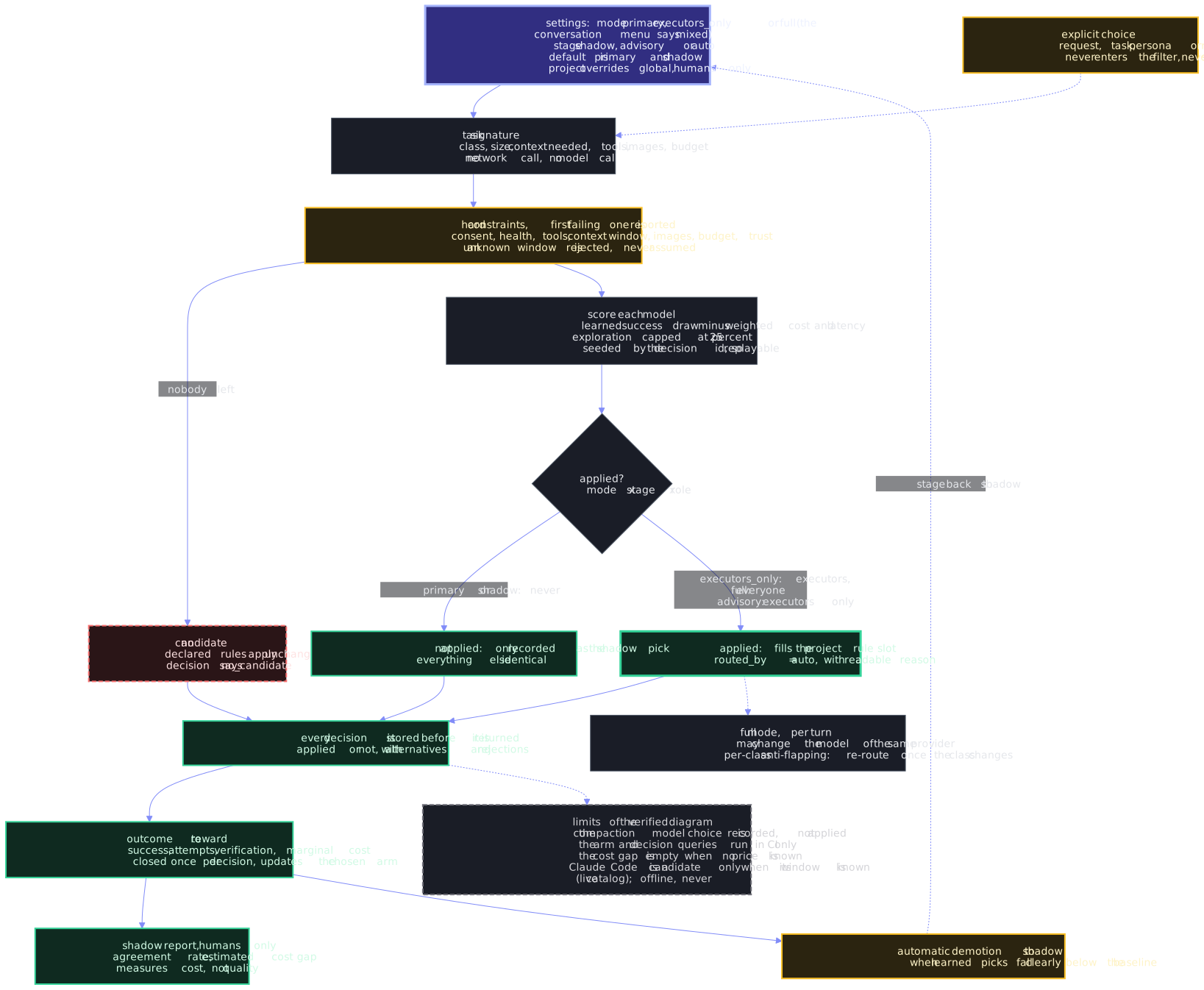
Cognitive routing: how a model gets chosen
Three routing modes, a stage that records before it acts, and decisions you can read and replay.
Read the walkthrough - Page 5 of 9
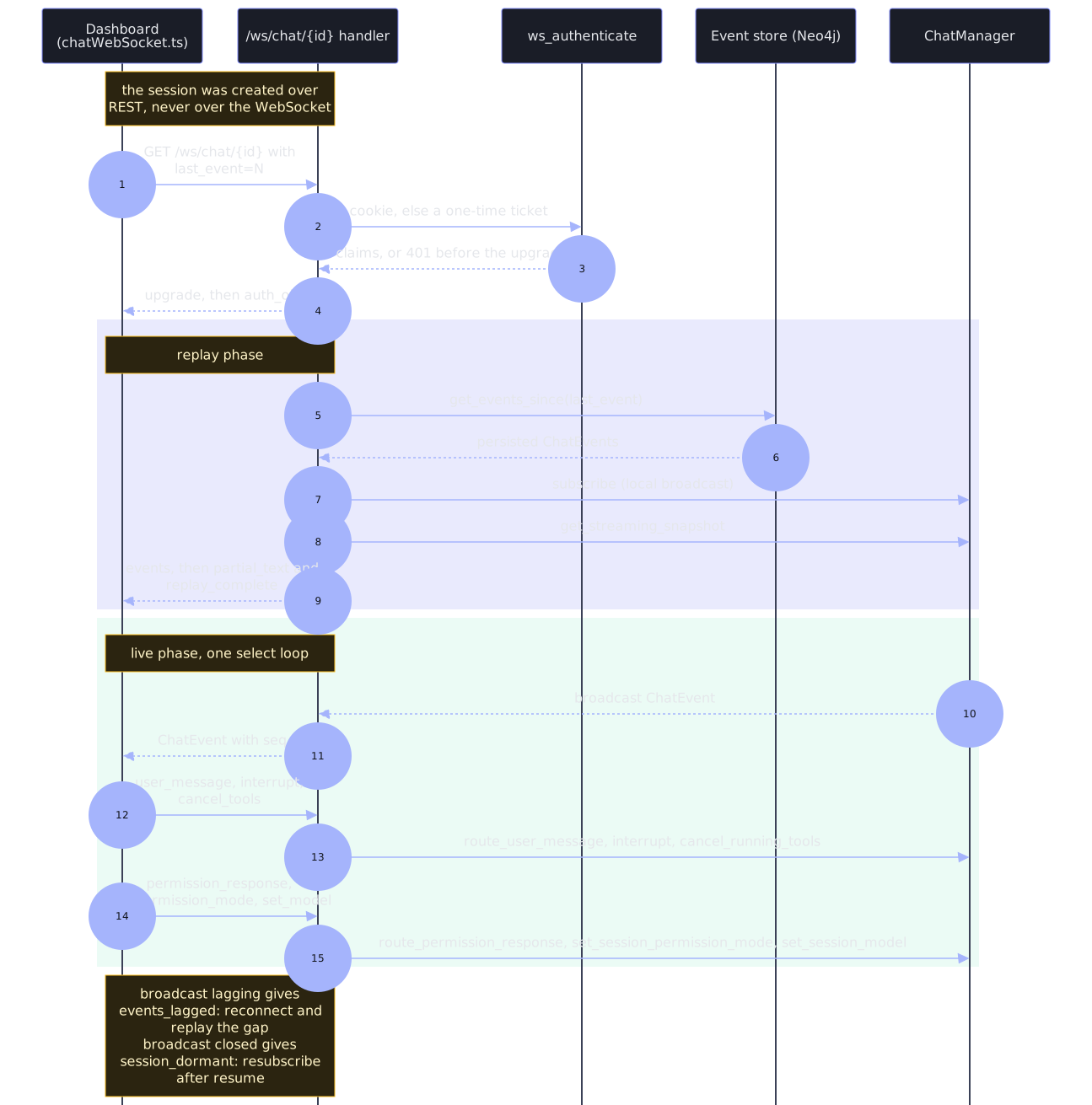
How the chat reaches your screen
One WebSocket per chat session: authentication, replay from the last event you saw, then the live stream.
Read the walkthrough - Page 6 of 9
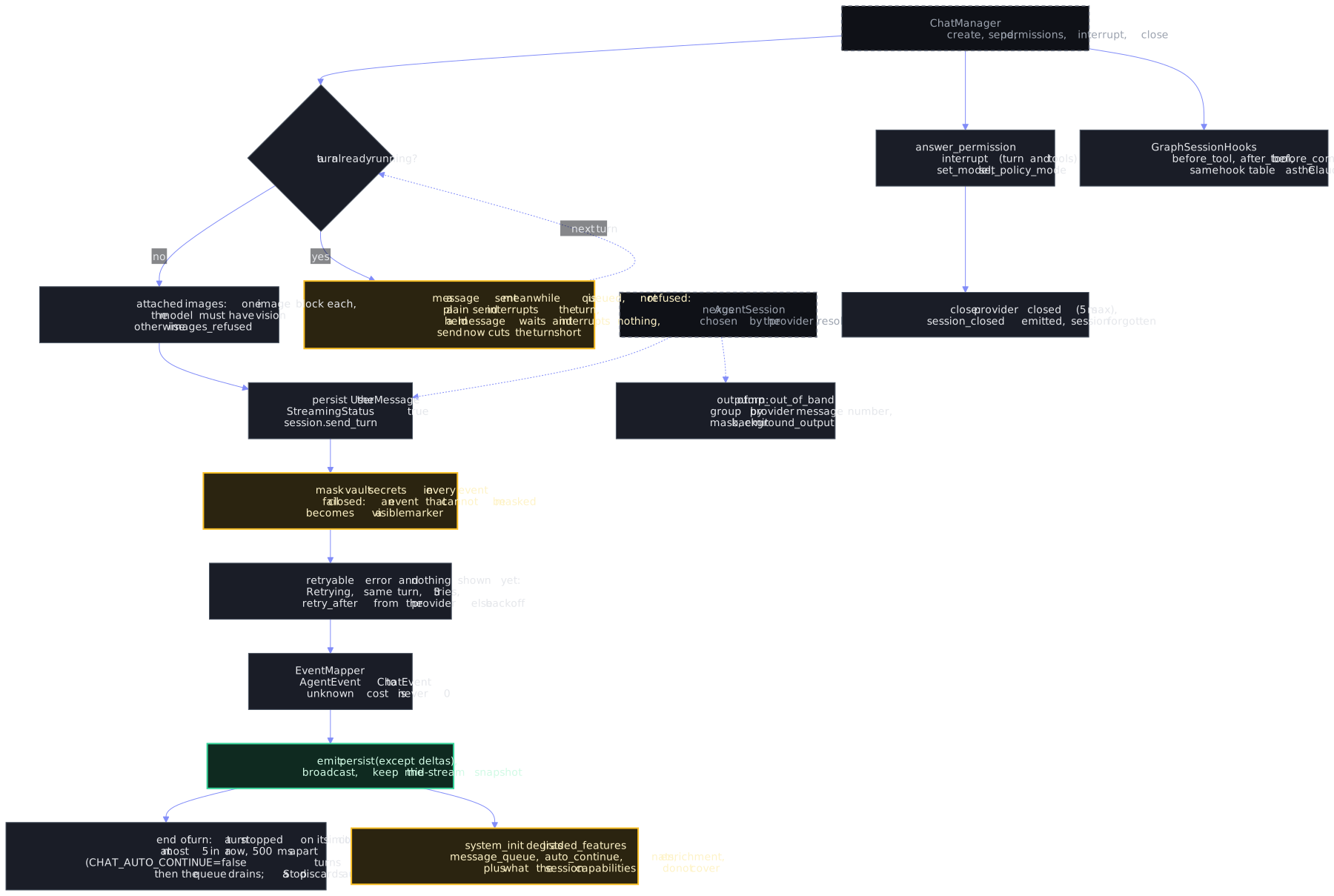
What happens inside one agent turn
What the chat does around one agent turn: queue, persist, mask, retry, map, broadcast, plus permission scopes and tool timing.
Read the walkthrough - Page 7 of 9
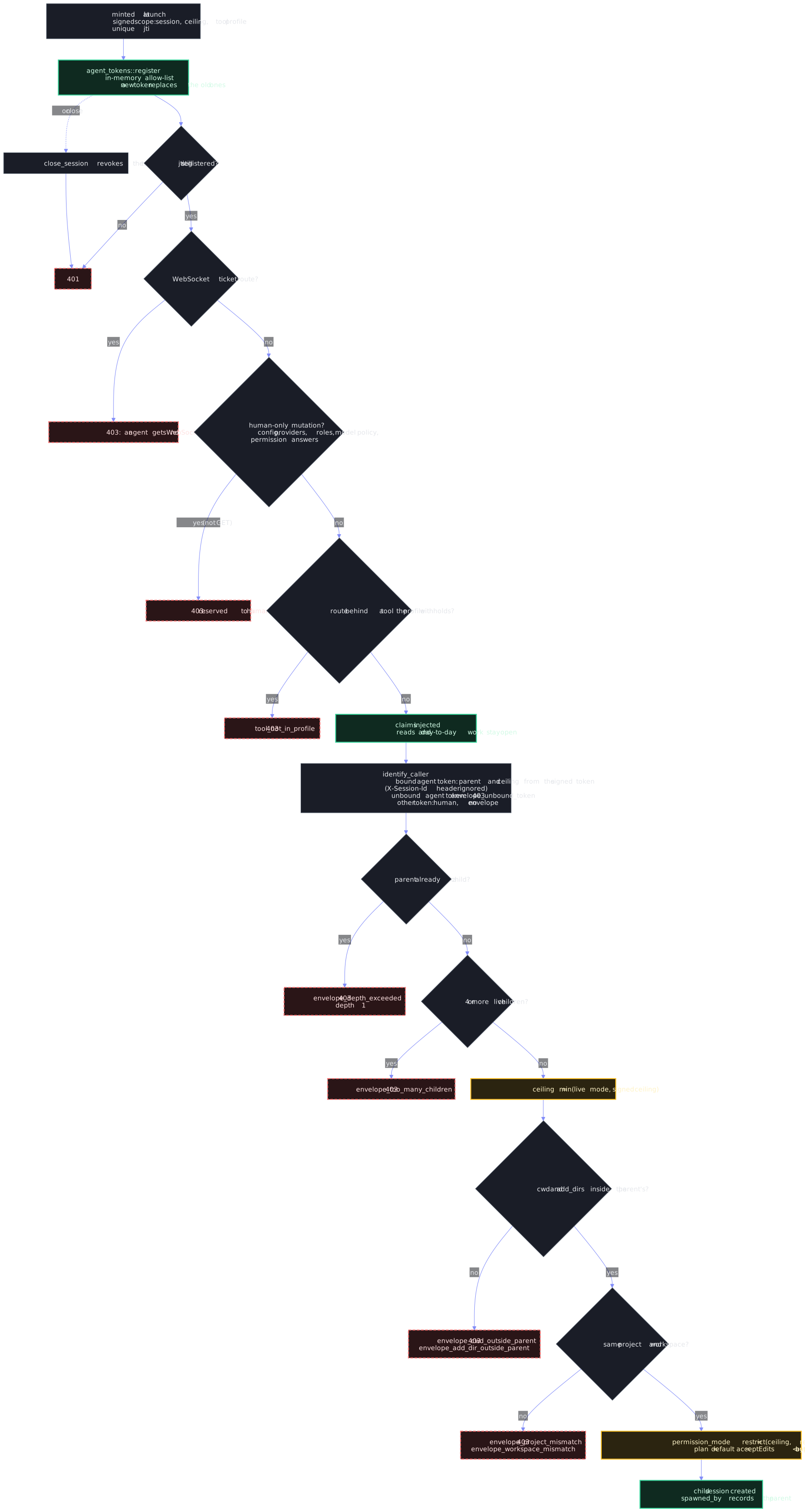
How an agent that spawns agents stays inside its limits
How a session opened by an agent gets a revocable token and an envelope that can only narrow its parent.
Read the walkthrough - Page 8 of 9
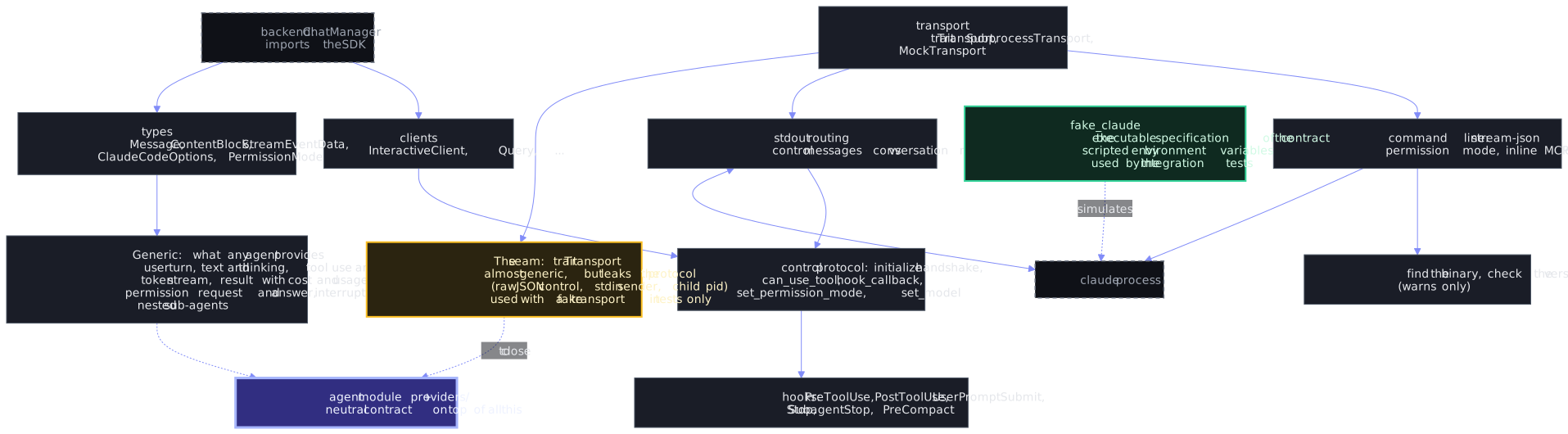
Where Claude Code ends and any agent begins
Where the SDK stops being a Claude Code client and starts being an agent SDK, and the fake CLI that specifies it.
Read the walkthrough - Page 9 of 9
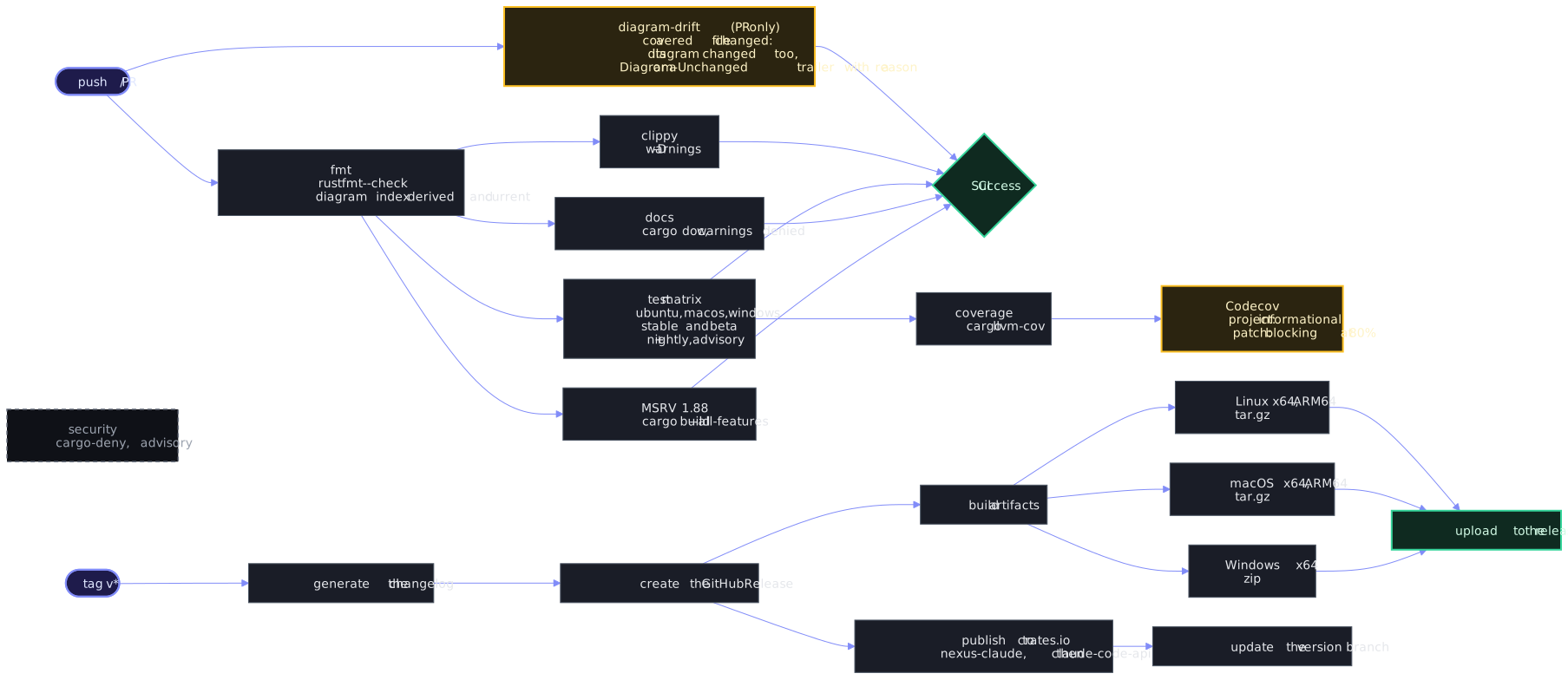
How a change reaches a release
The gates every change passes in the nexus repository, and how a tag becomes archives and crates.
Read the walkthrough

Connect other agents
Use Project Orchestrator from OpenClaw, Cursor or any MCP client, and see what an OpenClaw session lacks when Project Orchestrator hands it work. Exact settings, honest status.
Open the connection guideHow a skill creates itself
The exact mechanism that turns linked notes into a skill, with its thresholds and limits, and the dated journal of a real procedure built and run in one day.
Read the mechanism and the journalAbout these diagrams
Three things to know before you trust a diagram on these pages.
- Verified at the sourceEach internals diagram comes from a diagram stored in the public nexus or backend repository, marked as verified there with a date or a commit.
- Redrawn, not copiedThe site version is a readable redraw: same boxes and arrows, without test names, file paths or hosts. Each page names its source diagram and when it was checked.
- Labels stay in EnglishThe names in the boxes are the ones used in the code, so you can search for them in the repositories.
Most recent verification: 6 October 2026.Source repositories:project-orchestratornexus